
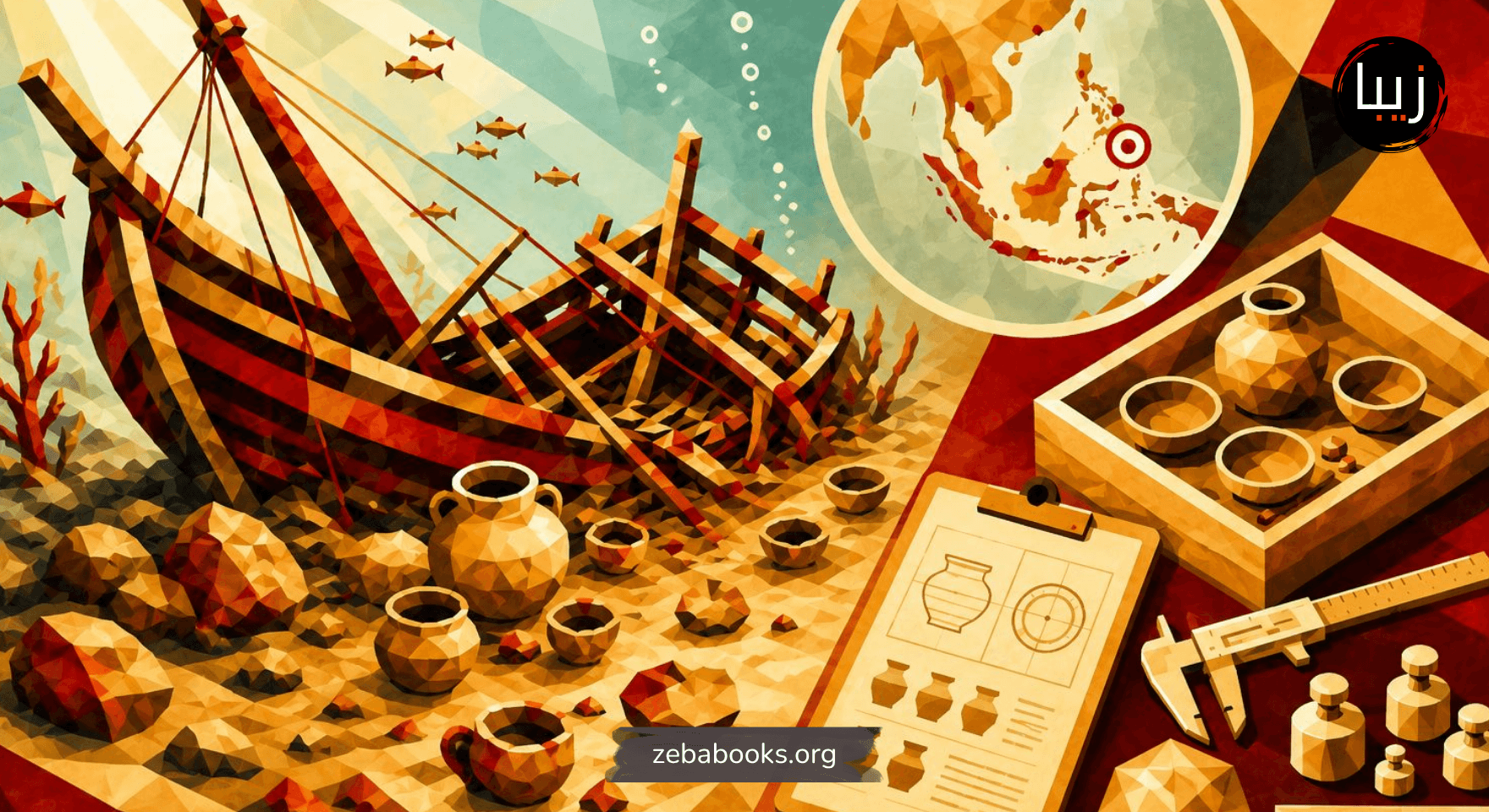
Introduction: Maritime Trade and the Problem of Uncertainty
Oceanic commerce in the pre-modern Indian Ocean was about much more than just moving commodities. On ships sailing from Basra to India, from Siraf to East Africa, and from Aden to Malabar, the precious cargo included spices, horses, textiles, ivory, pottery, and perfumes. Each expedition was delayed by weather, reefs, piracy, illness, navigational errors, political upheaval, and shifting winds.
As a result, trading has always been closely linked to danger.
In the absence of contemporary marine insurance, nautical charts, and institutional organisations that can completely eliminate risk for investors today, merchants were forced to make decisions. If the program was to be used, it was vital that there be clear answers about unexpected weather, perilous routes, unsafe ports, and where one could (or couldn’t) land. Risk management existed before the creation of formal insurance contracts, but it was practised differently.
We used storytelling as one of our tools.
A significant element of Indian Ocean nautical literature was accounts of bizarre islands, sea monsters, predatory birds, fearsome storms along the coasts, lost ships along or offshore, huge waves at sea, reefs, coral, rocks or shores, strange ports, harbours, and quays. Those were only literary amusements. They frequently kept useful information about locations with perilous sailing conditions, rampant piracy, or uncertain political control.
This highlights the significance of ʿAja’ib al-Hind (the Wonders of India).
The ʿAja’ib al-Hind, credited to Buzurg ibn Shahriyar al-Ramhurmuzi, is a collection of sailors’ accounts, merchants’ stirring stories, shipwreck tales, and descriptions of dangerous sailing in the Indian Ocean.[1] The poem has weird monsters and treacherous islands, storms and pirates, and tales of harrowing voyages. While many of these reports are incredible, they also reveal the anxieties of those who lived off the sea.
This included what worried merchants, how sailors remembered the dangers they faced, and the discourse on hazard in ports and commercial enclaves.
For example, K. N. Chaudhuri demonstrates that the Indian Ocean trade was essentially time-based, necessitating continual trust to assess non-advantageous behaviour rather than geographical mobility (17-20).[2] For example, Dionisius Agius shows that even after written knowledge became available, oral transmission and sailors’ practical experience remained key to navigation.[3]
This chapter examines how sea-related traditions in ʿAja’ib al-Hind influence business decisions. The three are related: narrative as risk coding, the translation of folklore research into rule-of-thumb practical navigations, and the relationship between psychological risk and the investment process.
I. Narrative as Risk Encoding: Monsters, Myths, and Hazards
Describing Danger Through Story
Not all the risks of maritime commerce can be articulated in technical terms. Risks were typically unforeseen, poorly planned, or experience-based. Sailors and traders used narrative to tell stories about dangerous places and difficult travels.
This procedure is mostly discussed in the ʿAja’ib al-Hind. It’s giant sea monsters, strange islands, angelic birds that destroy them with storms and sink the ships while they’re sitting on their sandbars waiting to get beached. Those reports may appear fanciful, yet they were measures to protect risky places during routine sailing.
Galvanising a submerged reef into a marauding island that eats ships.
It may be a perilous coast to remember, or a cursed shore.
Ghostly images could indicate an area with extremely seasonal winds.[4]
That is not to say that every story can be mapped straightforwardly to a technical rationale in the modern day. Rather, narrative helped marine communities maintain caution in situations where appropriate measurement was limited. Both observation and symbolism shared the goal of avoiding loss.
Merchants paid close attention when several seamen repeated the same story about the same location. Repetition built credence and created expectations of threat.[5]
Sea Creatures and Maritime Zones of Danger
In maritime literature, sea monsters weren’t just silly fantasies; they showed real dangers—areas to avoid. Large birds warned of severe gusts and perilous shorelines. Perhaps hostile islands indicated complex politics or criminals waiting on the beach.
The sea folks learned their craft through apprenticeship, hearing stories from mentors, and hands-on experience, sometimes guided by tools.[6]
Ports weren’t only for commerce. They also functioned as information-sharing hubs. When ships arrived, they brought news of changes in the weather, pirates, new political developments, famines, illnesses, and developments with foreign leaders. This gossip was super important for the merchants plotting their next big move.
You know where all this talking was done? Markets and inns, mosques and ports and merchant hangouts. There were tales of violent storms in the Arabian Sea, problematic pirates off Socotra, and deadly tyrants in East Africa. Not officially recorded – only passed on in the way of gossip among the sailor crowd.[7]
Sometimes the merchants would make their selections based on the sailors’ stories from particular voyages. These familiar stories shaped their thinking about profit and security at sea in significant ways.
II. Translating Folklore into Navigational Risk Categories
Storms, Winds, and Seasonal Timing
According to ʿAja’ib al-Hind, uncontrollable forces, such as storms and heavy winds, can destroy ships. This demonstrates how crucial the monsoon system was for the Indian Ocean commerce route. While the monsoons helped establish consistent wind patterns that enabled long-distance trade, they also posed significant financial risks. Ships could get into trouble if they sailed at the wrong time – missing good winds, running into storms, or being stuck for months.
K. N. Chaudhuri believes that understanding when the monsoon arrives is critical to successful trade. It’s not enough to navigate properly; you also need to understand the seasons. Merchants had to study wind patterns to determine costs, payment schedules, and what people would buy.
During the monsoon season, terrible storms arrive. Merchants see these as more than just weather disasters; they are financial hazards. Because of this, they carefully consider who to ship with, how to price things, and their money projections, too.[8]
Piracy and Violent Coastlines
Many books about sea adventures include descriptions of perilous beaches, which could allude to piracy and conflict on the high seas.
Ships continue to disappear along an often assaulted coastline. An unwelcoming island could signal a port where local leaders let cargo thefts slide. When texts mention surprise attacks by mysterious groups, it likely means remembering acts like boardings, kidnappings, seizures, or enslaving people.
Merchants who enter risky waterways anticipate additional fees to ensure their safety. This can include delaying departure, joining a protective convoy, hiring muscle, dividing cargo amongst ships, or taking longer, safer routes.
Even while all of these safety measures increase expenses, they reduce the likelihood of losing everything in an assault. As Sebastian Prange illustrates in his work on Indian Ocean merchant guilds, success in trade was heavily reliant on anticipating potential violence and devising measures to protect goods.[9]
Strange Islands and Navigational Hazards
The seafaring literature is filled with stories of islands that disappear, regions that shift and shores that are treacherous. But these were not mere stories; they were actual perils of the sea. “Sandbars move all the time, coral can hurt you, and little islands can disappear when the tide comes in. That speaks to how lethal those beaches may be.
It sounded suspicious to some people when sailors warned of perilous islands, but these weren’t fake reports. Traders depended on pilots and expert sailors to navigate. And, too, the more thrilling the story, the better it conveyed important warnings, not dull facts.
III. The Comparative Framework: A Mediterranean and Silk Road Perspective
To understand what is unique to the Indian Ocean in terms of risk management, we must first consider the contrasts between the Mediterranean and Silk Roads systems. The Indian Ocean employed “coalition-enforcement” and spoke of “risk-coding,” but other places used different forms of safety practices.
The shift to written legal papers was earlier in the Mediterranean, especially among the Italian city-states and the Geniza merchants. These were not reliant on stories, as Indian Ocean traders were, but rather established commenda and early marine credit arrangements in the Mediterranean. This sea is more “closed,” with ports not far apart, which helped folks send frequent written updates. But the Indian Ocean was so vast that stories of “wonders” were necessary, because delays were enormous and a strictly contractual system simply could not overcome that knowledge gap.
The Silk Road Comparison: On the terrestrial Silk Road, risk was mitigated through the caravanserai system – state-sponsored or philanthropic facilities that provided physical security. Empires (Mongols, Abbasids, etc.) had direct control over land trade, usually reducing the risk through diplomatic tribute and official protection. There was no caravanserai in the Indian Ocean, which was a “stateless” space. Thus, the “Wonders” provided a virtual infrastructure, delivering the mental maps acquired by land-based travellers at real waystations.
The analogy posits that the Indian Ocean’s dependency on storytelling was not a ‘primitive’ stage of development, but a sensible response to a vast, decentralised and environmentally fragile marine zone with little institutional protection.
IV. Psychological Risk and Investment Behaviour
Perception as an Economic Factor
Commercial decisions are dependent on perceptions as well as measurable hazards.
Routes that are potentially profitable may be perceived as risky, politically unstable, or associated with frequent merchant losses.
It retains the facts of hazards and the emotive language that accompanies them. There were rivers to be dreaded. In some ports, betrayal was a byword. Some beaches were deemed dangerous, even though the threat was not quantified.
Repeated reporting may cause a trader to abandon a winning strategy because it has become socially unacceptable. Someone else may seek a larger reward before embarking on a dangerous journey.
Psychological risk impacts freight costs, cooperation partnerships, and loan availability. “A road liable to repeated disaster requires more reasoning than a known dependable road. Routes’ financial attractiveness (or lack thereof) was influenced by their reputation.[10]
Risk Premiums and Commercial Pricing
Perception is as important as measurable hazards in economic decisions. The ʿAja’ib al-Hind equated unstable routes with “cursed” waters or ship-devouring monsters, which required a certain financial logic. This resulted in a system known as Psychological Pricing.
Prior to the development of marine insurance contracts, merchants incorporated risk into their business transactions. Margins were larger on riskier routes since they were more likely to incur losses. In this way, the pirate belt introduced security concerns and pricing categories. Merchant coordination depends on the ability to predict violence and protect supplies. In stories, the roads marked as “miraculous” or “monster-infested” were often actual trade routes, where specialist pilots would try to hike up their prices or where investors would demand a bigger slice of any eventual profit, to make up for the risk they were taking with their money.
Informal Insurance Before Formal Insurance
Later, more formal systems of marine insurance emerged, but merchants in the medieval Indian Ocean had practical ways of dealing with uncertainty.
They distributed their investments across ships.
They would share the risk of loss.
They postponed their journey after hearing rumours of peril.
They charged less for safe transport.
They had anticipated profiting more from dangerous excursions.[11]
The notion of storms or pirates was common, and prudence became a virtue. Statistical computations in the contemporary sense were not required for merchants.
Research on informal trust linkages, such as Sebastian Prange’s work on merchant networks, demonstrates how economic activity was affected in the absence of explicit institutional assurances.
The more “wonders” recorded along the route, the higher the overall markup for the consumer.
They assisted the investor in determining the level of risk he was willing to take.
Reputation, Confidence, and Long-Term Investment
Both Abu-Lughod and Ho emphasise the importance of inherited reputation and trust in long-distance trading. Not only merchants and commercial families had reputations and trust; ports, routes, and even seasons did as well.
If a major shipwreck or violent incident becomes widely publicised, it can have long-term consequences. Commercial memory was a one-time event repeated over ports.
This is just one of the reasons why ʿAja’ib al-Hind holds importance outside literary studies. Trust grew out of repeated experience. Thus, commercial history is a history of ships, goods, and memory.
Chapter Post-Mortem: Maritime Risk Was a Commercial Institution
Trade in the medieval Indian Ocean was always fraught with uncertainty. Merchants encountered storms, piracy, navigational risks, political instability and long delays in communication, all without the benefit of formal insurance systems or centralised maritime organisations. Experience and collective memory led to the development of practical tactics for commercial survival.
The stories that survive in the ʿAja’ib al-Hind show that they served functions beyond entertainment. Merchants and sailors employed trade networks to share knowledge of navigation, to recognise risky passages and to recount stories of dangerous coastlines, bad storms, unfriendly ports and odd islands.
Risk management has evolved through informal yet very effective ways, as follows:
warning via oral transmission, choosing routes based on reputation, diversifying cargoes, forming alliances for loss-sharing, and timing trips according to monsoon cycles.
These agreements ensured the continuation of marine trade in the absence of official insurance or centralised regulation.
The chapter also shows how perceptions of danger influenced commercial activity. News of piracy, shipwrecks, or untrustworthy ports was common. This influenced investment decisions, product pricing, and route selection. Merchants were willing to earn less on safe journeys and to pay larger profits on dangerous ones.
‘Aja’ib al-Hind concludes that minimising maritime hazard in the Indian Ocean required communication, memory, and shared experience, in addition to material preparedness. Narrative became an important part of business activity because it transformed isolated experiences into collective knowledge that merchants could use to make economic decisions.[12]
References
- Buzurg ibn Shahriyar al-Ramhurmuzi, ʿAja’ib al-Hind (The Wonders of India), discussed in G. S. P. Freeman-Grenville, The East African Coast: Select Documents from the First to the Earlier Nineteenth Century (accessed April 29, 2026).
- K. N. Chaudhuri, Trade and Civilisation in the Indian Ocean: An Economic History from the Rise of Islam to 1750, (accessed April 29, 2026).
- Dionisius A. Agius, Classic Ships of Islam: From Mesopotamia to the Indian Ocean, (accessed April 29, 2026).
- Buzurg ibn Shahriyar, ʿAja’ib al-Hind.
- Sebastian R. Prange, Monsoon Islam: Trade and Faith on the Medieval Malabar Coast, (accessed April 29, 2026).
- Engseng Ho, The Graves of Tarim: Genealogy and Mobility across the Indian Ocean, (accessed April 29, 2026).
- Janet L. Abu-Lughod, Before European Hegemony: The World System A.D. 1250–1350, (accessed April 29, 2026).
- M. N. Pearson, The Indian Ocean, (accessed April 29, 2026).
- Chaudhuri, Trade and Civilisation in the Indian Ocean.
- Agius, Classic Ships of Islam.
- Prange, Monsoon Islam.