
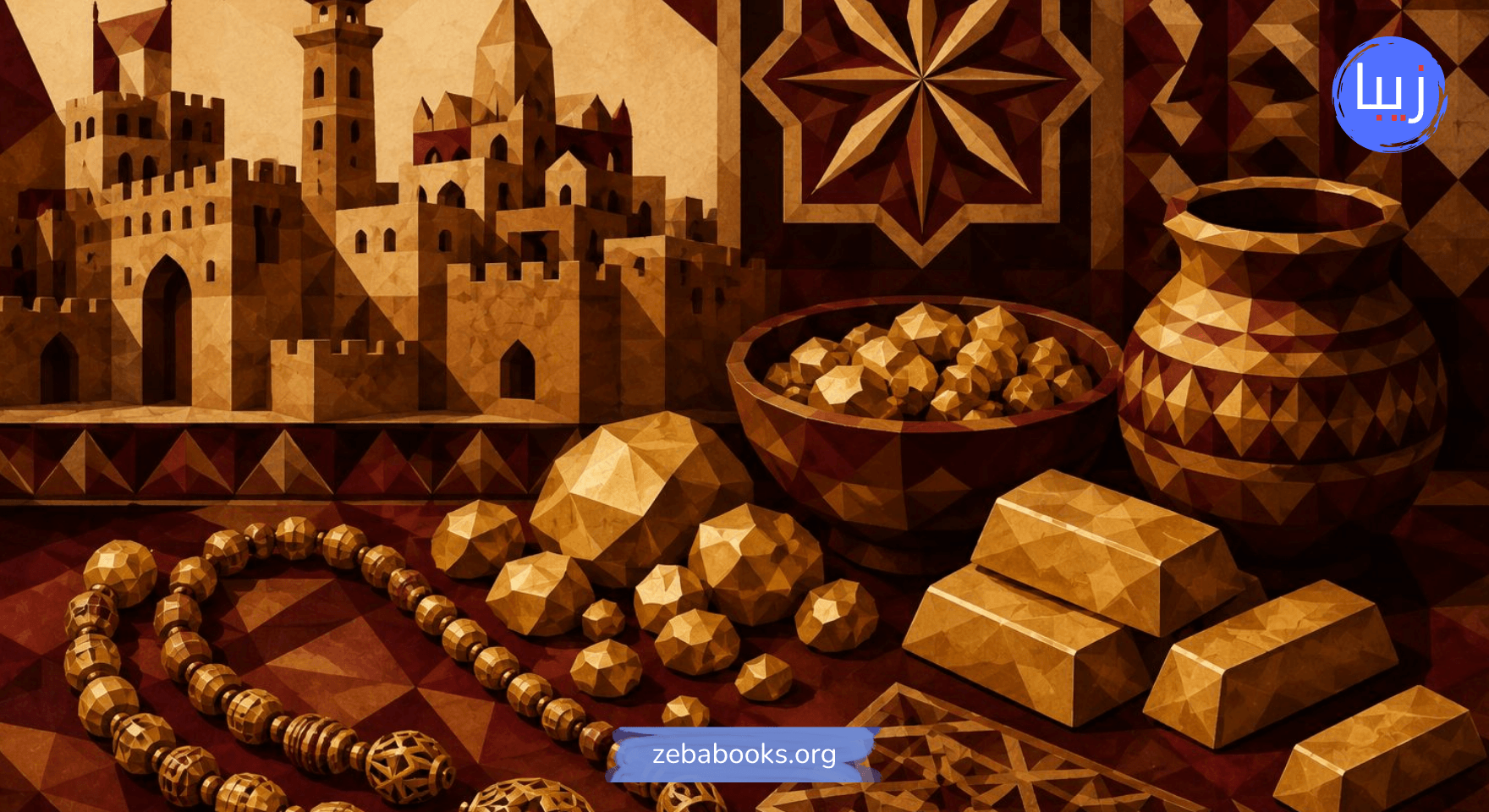
Introduction: Gold Reached the World Through the Coast
Gold from southern Africa, particularly around the Zimbabwe Plateau and the larger Zambezi system, didn’t become valuable on the global stage until it was traded far and wide. Having it out of the ground wasn’t enough; it needed to travel far and wide to count as truly valuable.
Traveling from the mines to the Swahili coast was tough. Gold-rich areas were usually very politically unstable. Plus, caravans had to navigate or pay for protection as they passed through various territories. So, pulling off successful trade required solid systems for risk, security, and exchange management.
But gold’s value wasn’t guaranteed once it reached the coast either. To work in international commerce, it needed to go through reliable trade routes, get properly measured and protected, and become part of recognized monetary systems.
Gold became valued when it started circulating . It got taxed and received legal status . Coastal ports were not only gateways for gold; they assayed it, they took their cut, and they plugged into bigger trading systems.
Kilwa Kisiwani played a major role in this process.
Kilwa was more than another Swahili port city. By controlling access to Sofala, the primary coastal outlet connecting inland goldfields to maritime trade, it became one of the most powerful commercial centers in the western Indian Ocean. Sofala connected the coast to the gold-producing interior, while Kilwa maintained the political and commercial authority necessary to stabilize and regulate this exchange. Kilwa itself did not mine gold. Its authority rested upon controlling the gateway through which gold entered maritime circulation.
That’s a big difference. Gold didn’t just move from Africa into the global markets. Taxes, security, merchant trust and legal protections established by coastal leaders caused it to flow.
This notion is supported by the Kilwa Chronicle.[1] It deals with kings and succession struggles but it indicates that political power was linked to control of Sofala and the trade in the region. It was not just about land, controlling ports was good business.
This is confirmed by the investigation of Freeman-Grenville. Additionally, Neville Chittick’s excavation has shown that Kilwa’s wealth came from controlling trade in the area rather than actively mining minerals.
Wealth accumulated not only where gold was extracted, but where its circulation could be regulated.
Wealth accumulated not only where gold was extracted, but where its circulation could be regulated.
Gold linked inland Africa to the wider Indian Ocean economy. Merchants operating across the western Indian Ocean viewed East Africa not as a distant frontier but as an important bullion zone whose political stability influenced trade decisions as far away as Aden, Hormuz, Cambay, and Cairo.
I. Kilwa as a Port of Power
Kilwa wasn’t just a port; it was a regulator of trade.
While many ports joined in trading, Kilwa really ruled the roost when it came to accessing some super profitable routes. Its clout wasn’t just about its size—it depended on its ability to control the connection between inland wealth and maritime business. Sofala linked the coast to the interior where gold was mined. Kilwa used political might to keep things steady and in check.
Money stuff there was tied as much to legal rights as to geographical perks. The Kilwa Chronicle shows that royal families claimed their right to rule based on their control over Sofala. Kings didn’t just have military power—they held sway over trade too. They earned their right to rule through conquest, but also by keeping merchants happy and managing exchanges well.[2]
A ruler who has power over the sea routes that everyone has to use gets a lot of money from customs. People respect them more. They have more authority. The money that the ruler gets from taxing merchants is used to build cities and make the whole region stronger. So when merchants do well it helps the ruler become more powerful.
This is why Kilwa became a port more than all the other ones. Merchants like to do business in places that’re safe and predictable rather than places that are unpredictable but have a lot of resources. A port that is safe and reliable will get a lot more business than a port that has a lot of resources but is also very unpredictable.
Kilwa became a place to do business because it had fair customs rules, it was a safe place and the leaders were good at their jobs. For merchants to be successful they need rules that make sense and leaders who can enforce them as much as they need access to resources. Kilwa had all of these things which’s why it was able to grow and become so attractive, to merchants
Regulation Through Access, Not Open Markets
It was not as though foreign traders could just come in, trade freely, and leave again. The entire trading process was controlled by authorization, anchor control, customs duties, guarantees from the King, and any political power acknowledged as restricting trade access. The ports were not open-air trading locations as we think of them today, but rather were legal jurisdictions that placed value on just the act of entering them
This led to the establishment of a hierarchical hierarchy of mobility as follows:
- Inland producers controlled the process of extraction
- Caravans controlled inland transportation
- Sofala acted as an intermediary between inland production and sea transportation
- Kilwa controlled the access of distant traders
Frequently, the largest gains went to the regulator rather than the miner.
Not only were resources removed from areas with high wealth concentrations, but also from areas with low wealth concentrations. It piled up where its movements could be monitored. The transfer point frequently provided more leverage than the manufacturing location. Whoever dealt with exchange control, taxation, negotiation, and price structures.
Horton and Middleton, in their research into Swahili culture, agree that the coastal economy achieved its wealth by acting as brokers, regulating the distribution of trade goods rather than owning natural resources found inland. The city-state of Kilwa demonstrates this point; its power stemmed from controlling access to trade routes rather than from a purely exploitative relationship to production. The rulers of Kilwa controlled both the availability and distribution of goods for producers and customers.[3]
Kilwa’s rulers understood that traders would return only when regulations were stable enough to plan for. Recurrent trading equals recurrent confidence.
Port Cities as Commercial Courts
Swahili ports were not small coastal towns that waited for outside empires to organize trade.[4] They were independent business establishments with their own political and judicial powers.
The strength of the city of Kilwa was that it had a lot of things in an area rather than being a big city.
Prior to becoming a port city, the harbor served as a court.
Merchants, from countries wanted help with problems getting their money back and protection from people taking their things without a good reason. This help made business work better. More boats went to a port because it was a place to do business not just because it had a lot of things people wanted. When people knew what to expect it made everyone wealth.[5]
So when we think about how Kilwa started we should think about it as a place that grew and also became a place where business and law worked together. The reason it was so strong is that people believed the business deals made there would matter everywhere.
II. Gold, Sofala, and the Architecture of Supply
Gold Did Not Move Alone
Gold moved through a series of trust relationships, labor exchanges, and tiered commerce. The gold that came from the mines on the plateau of Zimbabwe and in the surrounding inland regions of Zimbabwe was produced at a considerable distance from ocean commerce. So, the gold passed through multiple tiers (miners, local chieftains, brokers in the hinterland, caravans, regional traders, etc.) and was transported to coastal hubs (which had authority over shipping to the Indian Ocean). But every transaction included negotiation, risk, and control.
As a result of each gold movement, the transaction’s risk and price also increased.
Merchants wishing to invest in gold had to feel confident that they could adequately protect their capital by ensuring that inland transportation would withstand the very real dangers of theft/violence,/instability of political instability, as well as the violence caused by frequently changing alliances among people living in those two categories. Without reliable mobility, the economic value of gold would have been restricted from moving freely and, therefore, shackled.
Sofala was important because it connected the inland supply to the sea demand.
Kilwa became important because it regulated and stabilized that connection.[6]
Archaeological digs and coastal records suggest that Sofala served as a hub for inland African and maritime commercial systems. It wasn’t just an export port. It was a place where political trust needed to be translated into commercial confidence. There, products have to be seen as more than just stuff; they also have a specific trading value.
This is why rulers invested in controlling Sofala rather than attempting direct conquest inland. Controlling land was not always as profitable as controlling mobility.
Why Global Markets Needed East African Gold
Gold was much more than just elegant rich items. In the Islamic world, India and across the Mediterranean it was used as bullion, reserve value, material for currency and for show or offerings in religion. Gold was crucial to nations, merchants and monarchs – needed for currency, easy trading and shows of power. So it poured into business, politics and religion, to keep that huge demand going around the board.
Traders from places like Gujarat and Aden traveled to the Swahili coast for gold too. This gold was key to their commerce across that region. When they got it, they’d exchange it for things like textiles, horses, and spices, plus form political deals.
This elevated Kilwa beyond the status of an ordinary trading town. It became a strategic point connecting inland extraction with wider systems of finance and exchange.
Bullion therefore shaped diplomacy as much as commerce.
Foreign merchants and rival powers negotiated constantly over access to gold supplies. Gold influenced pricing systems, regional diplomacy, and political bargaining across the western Indian Ocean.
Pricing Power Was Political Power
Rulers set the laws of trade and regulated the customs process and coastal ports. For this reason traders had to keep on good terms with the government of Kilwa. Over-extraction hampered trade. Under-regulation decreased political power.
To survive, a port must balance economic growth with political control. If a king was unable to safeguard traders, they would leave. And heavy taxes drove them away, too. And so Kilwa has to maintain that balance throughout time.
Revenue had to remain high enough to reinforce authority but moderate enough to preserve merchant participation. Port administration therefore required constant political and commercial calibration.
III. Law Made Gold Believable
Trade Required Protection Before Profit
The travelers certainly did not travel to the New World to endanger themselves. The foreign traders who came from overseas to Kilwa wanted more than just business; they wanted the certainty that their goods would be delivered safely, their contracts honored, and their disputes settled without bloodshed.
The Kilwa Chronicle is a political memory of rulers whose legitimacy was based on their ability to maintain this confidence. A monarch who could not protect traders jeopardized both his wealth and his reputation. Before it was an economic failure, it was frequently a legal one.
That is one of the reasons why port cities were brought to the fore. They combined legal authority. Merchants can resolve disputes, collect debts and negotiate contracts inside recognised groupings rather than resorting to private force or personal vengeance, recoup debts, and negotiate agreements within established groups.
A trader might brave storms or piracy, but arbitrary rules eliminated the possibility of preparation.
Islamic Legitimacy and Merchant Confidence
Kilwa was part of the Islamic trade culture but also adapted to local political structures. Islamic legal principles established a similar set of expectations among traders from Arabia, Persia, and western India.
When a Muslim approached Kilwa, he expected to find identical techniques of affirming oaths, admitting debts, executing contracts, and exercising judicial authority. This trust did not erase local authority, but it did raise the chances of local authority being trusted. A merchant can transact in his known moral and legal environment which minimises transaction cost.
Religious legitimacy increased the ruler’s influence by linking local control to greater commercial objectives in the Indian Ocean. A port trusted by international commerce was more valuable than a port rich in merchandise but lacking in enforcement.[7]
Merchants were investing in distance, thus this legal expertise was vital. Shared expectations reduced the expense of operating in unfamiliar jurisdictions. A comfortable legal environment transforms strangers into business partners.
Reputation Was an Enforcement Mechanism
Commercial order relied not just on courts, but on reputation, repeat encounters and mutual duties. As such, port cities served as memory centers, maintaining commercial reputations across the Indian Ocean. Merchant communities exchanged information about safe ports, bad trade situations and trustworthy leaders too.It also encouraged Kilwa’s rulers to cultivate reputations for fairness, especially toward foreign merchants whose repeated travels created customs revenue.
This encouraged Kilwa’s rulers to maintain reputations for fairness, particularly toward foreign merchants whose repeated voyages generated customs revenue.
The commercial law operated by:
- security guaranteed by the ruler
- recognized judicial power
- legitimacy in religion
- reputation among the merchants
- reciprocal exchange
Trust operated as a practical enforcement mechanism across maritime trade networks.
This system substituted for centralized commercial courts and modern financial institutions.
Currency Integrity and Trust Verification
Gold’s circulation was also determined by trust in purity and measurement. Merchants were always concerned about adulteration, counterfeit bullion and disputes over weighing standards. A shipment of gold dust which buyers suspected to be impure or tampered with could lose its value at once.
So commercial exchange needed systems of verification of trust. Traders relied on known scales, expert weighers, constant testing and the reputation of the port itself. These arguments about weight and purity were not minor technicalities. They had direct effects on taxation and prices, and confidence of merchants.
So Kilwa’s authority rested as much on the protection of trade routes as on the maintenance of faith in the integrity of trade. The merchants of a port with a reputation for bad measures or bad gold might drift to its commercial rivals.
IV. Comparative Note: Kilwa and Maritime Legal Order
Modern trade is based on insurance policies and contracts, international shipping law and arbitration agreements. Mediaeval Indian Ocean traders employed various techniques to mitigate risk when making an investment, but the basic goal remained the same: to avoid uncertainty before investing.
Maritime traders relied on government guarantees instead of purchasing marine insurance. They relied on the authority granted to a port rather than international arbitration.
They relied on reputation and unremitting enforcement, not shipping tribunals.
It was less bureaucratic than the system, but it still adhered to recognisable commercial logics.
Kilwa shows that the African commercial centers were not mere marginal players waiting to be organised by outside forces. They were the architects of the working law of the seas. Their leaders knew that what they exported most precious was not riches, but self-confidence.
The coast was therefore not passive geography, but a politically organized commercial zone.
Chapter Post-Mortem: Financial and Legal Instruments Identified
In addition to its great wealth, Kilwa’s power and status within the Indian Ocean trading system stemmed from its control over the flow of goods.
The power of trade was exercised via:
- control over access to ports and customs duties
- domination over Sofala and its sea gates
- a systematic flow of gold from the interior to the coast
- price advantages generated by limited access to gold
- guarantees of safety for foreign traders
- Islamic trading practices and judicial standards
- protection and enforcement of contracts backed by the ruler
- reputation systems that controlled rulers and traders alike
- taxation as an exercise of commercial trust
- sovereignty of ports, both economic and legal
- verification of bullion purity and weighing standards
- merchant trust systems against adulteration and counterfeit exchange
Kilwa’s power lay not only in gold itself, but also in its ability to regulate the movement, legality, and credibility of gold in Indian Ocean trade.[8]
References
- “The Kilwa Chronicle,” in G. S. P. Freeman-Grenville, The East African Coast: Select Documents from the First to the Earlier Nineteenth Century (accessed April 28, 2026).
- Ibid.
- Mark Horton and John Middleton, The Swahili: The Social Landscape of a Mercantile Society, (accessed April 28, 2026).
- James de Vere Allen, Swahili Origins: Swahili Culture and the Shungwaya Phenomenon (accessed April 28, 2026).
- Horton and Middleton, The Swahili.
- Randall L. Pouwels, Horn and Crescent: Cultural Change and Traditional Islam on the East African Coast, 800–1900 (accessed April 28, 2026).
- Engseng Ho, The Graves of Tarim: Genealogy and Mobility across the Indian Ocean (accessed April 28, 2026).
- Freeman-Grenville, The East African Coast.